Showing posts with label mind control. Show all posts

Saturday, 13 October 2012

Truth Serum, a brief description of chemical interrogation

The unethical use of truth drugs is classified as a form of torture according to international law. However, they are lawfully and productively used in the evaluation of psychotic patients in the practice of psychiatry. That application was first documented by Dr. William Bleckwenn in 1930, and it still has selected uses today. In the latter context, the controlled administration of intravenous hypnotic medications is called "narcosynthesis" or "narcoanalysis."
The process by which sodium pentothal came to be used to obtain confessions of guilt was a circuitous one. The particular compound was invented in 1934 by Ernest H. Volwiler and Donalee L. Tabern, both of whom were trying to invent another pain killer. Although it did relax a patient, and enough of it knocked a person out, sodium pentothal didn't kill pain as much as they had hoped. It wasn't ideal for surgeons, but it came to be used by shrinks. Psychiatrists during the World Wars saw some soldiers with acute shell shock who either had great difficulty speaking or were unable to speak at all.
It may be used to procure diagnostically—or therapeutically—vital information, and to provide patients with a functional respite from catatonia or mania. Some detectives in India still swear by so-called narcoanalysis despite India's highest court ruling that it was not only unreliable but also "cruel, inhuman and degrading". Officers from India's Central Bureau of Investigation (CBI) asked a judge for permission to administer sodium pentothal to a high-profile Indian politician and his financial adviser embroiled in a corruption case. The drug is a barbiturate that acts on the central nervous system, dissolving anxiety, inducing drowsiness and even unconsciousness. There are no official figures for the number of suspects who have been subjected to narcoanalysis, but VH Patel, deputy director at the Directorate of Forensic Sciences, Gandhinagar, in Gujarat, western India, told the Guardian he had personally conducted narcoanalysis in nearly 100 cases. He estimates that his lab gets requests for narcoanalysis three to four times a month. He insisted that the procedure was safe and ethical. "There is no violence involved. It's a good methodology that helps the investigation," he said. "After all, there has to be justice for the victims.If we conduct narcoanalysis on a terror suspect, everyone kicks up a fuss, but what about the people who have suffered?".
A person injected with "truth serum" is generally too woozy to volunteer lengthy explanations, but is usually able to give answers to certain questions and clues. Patel said his lab had received no complaints regarding side-effects. But in 2011, Sheikh Mujib, an engineering student who was accused in a bomb blast case in the Indian city of Ahmedabad, complained of health problems after narcoanalysis.
Arun Ferreira, a political activist who underwent forced narcoanalyis after being arrested in 2007 under the Unlawful Activities Prevention Act for being an alleged Maoist, described the procedure as a sort of torture – and one whichthat "only decreases the individual's ability to lie and is in no way a foolproof method for uncovering the truth". The revelations supposedly made under the influence of truth serum may contain fantasies like a person under the influence of alcohol."
The inventor of narcoanalysis, an American obstetrician called Robert House, originally meant it to exonerate prisoners. During his time in labour wards around 1915, he noticed that the drug administered to women during childbirth, scopolamine, had a strange effect on his patients, causing them to talk freely. In 1922, he arranged to interview two suspected criminals under the influence of the same drug – they denied the charges and were later found not guilty.
Many barbiturates fall under the “truth serum” category, including scopolamine, sodium amytal, and Sodium Pentothal. Scopolamine was tested in the 1950s as a truth serum in project MKULTRA, and is now infamous as a date-rape drug due to its tendency to cause retrograde amnesia (the inability to recall events prior to its administration). Sodium Pentothal is a drug which is commonly used in operating rooms as general anesthesia, though in recent years it has been largely replaced by better alternatives.
Another of the most common truth serums is ethyl alcohol, the same agent that is found in alcoholic beverages. As a truth serum, it is usually injected in a nearly pure form, but its effects are indistinguishable from those caused by consuming large amounts of alcohol orally. If you’ve ever been intoxicated, then you are personally familiar with the effects that truth serum has on the mind and body.
All of these truth serums work in the same manner: They depress the central nervous system and interfere with judgment and higher cognitive function. A person in such a state tends to regurgitate a cocktail of information which is a blend of facts and fantasy, with many details exaggerated or omitted. In a word, unreliable.
In 2006, a lawyer for Jose Padilla, the accused dirty-bomb plotter, made an explosive claim in a federal court filing: the "enemy combatant" was "given drugs against his will, believed to be some form of lysergic acid diethylamide (LSD) or phencyclidine (PCP), to act as a sort of truth serum during his interrogations."
But what Seymour failed to disclose, reported here for the first time, was that Padilla was given the flu shot during an interrogation session and told by his interrogators the injection was "truth serum," according to a declassified Department of Defense (DoD) inspector general's report that probed the use of "mind-altering drugs" during the interrogation of war on terror detainees.
Sanford Seymour, the technical director of the US Naval brig in South Carolina where Padilla was held, however, vehemently denied the charge during a 2006 hearing to determine whether Padilla, a US citizen, was competent to stand trial. Seymour asserted Padilla was injected with an influenza vaccine.
But just a few months after the deception on Padilla, according to the inspector general's probe, an unnamed DIA "representative" came up with a list of 40 techniques at the request of a Pentagon "working group" overseen by Rumsfeld that met between January and April 2003 to discuss interrogation methods to use on detainees captured in the global war on terror.
I am uncertain if truth serum is in used today to investigate detainees in Guantanamo, its controversial and ethical topic that requires more investigating. It is however undeniable that early history of espionage used such drugs to help test theories for mind control. Truth serums may be classed as unreliable in the past, but with hidden research the practice of chemical interrogation may become more accurate. Advances to neurology and brain interfaces would suggest better diagnostic tools for this type of mind control...

Tuesday, 2 October 2012

Psilocybin, the benefits of altered perception


Psilocybin is a naturally occurring psychedelic compound produced by more than 200 species of mushrooms, collectively known as psilocybin mushrooms. The most potent are members of the genus Psilocybe, such as P. azurescens, P. semilanceata, and P. cyanescens, but psilocybin has also been isolated from about a dozen other genera. As a prodrug, psilocybin is quickly converted by the body to psilocin, which has mind-altering effects similar to those of LSD and mescaline. The effects generally include euphoria, visual and mental hallucinations, changes in perception, a distorted sense of time, and spiritual experiences, and can include possible adverse reactions such as nausea and panic attacks.
Recent research suggests fascinating connections between the effects of the psychedelic drug psilocybin and personality traits related to inner experience. Personality appears to influence response to psilocybin and psilocybin can promote changes in personality, suggesting a reciprocal relationship. Further research in this area could lead to new insights into the basis of human personality and creativity.
psilocybin found that people who had never before taken the drug experienced an enduring increase in their level of openness to experience that was evident more than a year later, 60 percent of the 51 participants in a new study, say Johns Hopkins researchers.
By “openness,” they mean traits related to imagination, aesthetics, feelings, abstract ideas, and general broad-mindedness, the researchers said. Changes in these traits, measured on a widely used and scientifically validated personality inventory, were larger in magnitude than changes typically observed in healthy adults over decades of life experiences, the scientists say.
Researchers in the field say that after the age of 30, personality doesn’t usually change significantly. “Normally, if anything, openness tends to decrease as people get older,” says study leader Roland R. Griffiths, a professor of psychiatry and behavioral sciences at the Johns Hopkins University School of Medicine.
The research was approved by Johns Hopkins’ Institutional Review Board and funded in part by the National Institute on Drug Abuse. The study participants completed two to five eight-hour drug sessions, with consecutive sessions separated by at least three weeks. Participants were informed they would receive a “moderate or high dose” of psilocybin during one of their drug sessions, but neither they nor the session monitors knew when. During each session, participants were encouraged to lie down on a couch, use an eye mask to block external visual distraction, wear headphones through which music was played and focus their attention on their inner experiences.
Personality was assessed at screening, one to two months after each drug session and approximately 14 months after the last drug session. Griffiths says he believes the personality changes found in this study are likely permanent since they were sustained for over a year by many.
Professor Griffiths says he believes psilocybin may have therapeutic uses. He is currently studying whether the hallucinogen has a use in helping cancer patients handle the depression and anxiety that comes along with a diagnosis, and whether it can help longtime cigarette smokers overcome their addiction. “There may be applications for this we can’t even imagine at this point,” he says. “It certainly deserves to be systematically studied.
Psilocybin is known to strongly influence the subjective experience of the passage of time. Users often feel as if time is slowed down, resulting in the perception that "minutes appear to be hours" or "time is standing still". Studies have demonstrated that psilocybin significantly impairs subjects' ability to gauge time intervals longer than 2.5 seconds, impairs their ability to synchronize to inter-beat intervals longer than 2 seconds, and reduces their preferred tapping rate. These results are consistent with the drug's role in affecting prefrontal cortex activity. With MRI  studies blood flow have been reduced to certain areas to the brain, slowing or reducing activity to the mechanisms for "self" or "what we are"(the thalamus and anterior and posterior cingulate cortex (ACC and PCC). Although the toxicity of psilocybin is low in rats, the median lethal dose (LD50) when administered orally is 280 milligrams per kilogram (mg/kg). Psilocybin could be the key element to curing certain anxieties or depression from everyday constraints. Perhaps one day the chemical triggers that can reduce blood flow which deactivates anxiety can be manufactured without the hallucinations...

Saturday, 16 June 2012

Mind games, cyborgs or a way to control stuff

Sometimes I can be active and sometimes I can be a real lazy old git. That's why I like gadgets, just to squeeze extra micro seconds of time by using a electric thingamabob. I considered an electric tooth brush as my first gadget. Because who wants to physically scrub your mouth with a manual tooth brush.
except for the charging and the tooth paste dispensing, I'd say seconds gained on my morning ritual. Also an electric tin opener, because who wants to squeeze and twist a device to open a tin can. To ease the slight repetitive strain injury in my hands, I see these time savers can help with the limitations I have.

Bit what if we need more help then a tooth brush and a tin opener? disabled people with motor neuron disease or amputees looking to replace and arm. Things get complicated for end user to try and find a gadget to save time for his short comings.


New technology emerging from now allows Pierpaolo Petruzziello to connect to a robot hand by way of electrodes to be attached to his nervous system. The 2 million pound project, stimulated his arm to find his nerve endings and amplified back any concentrated output his amputated arm would signal. Or Tim Hemms successful brain operation to connect electrodes to neurons that controls his arms. Despite having a complete spinal injury, he eventually remapped his brain functions to allow him to control a robot hand.


Hard to say if technology is going to allow full connection of the brain as its early days but considering that there seems to an increase of war veterans and high risk of improvised explosive devices. There is even a possibility to suggest that the use of a military exoskeleton  for combat. Raytheon's sarcos xos2 exoskeleton could help save lives, because its gives its user extra strength to punch walls and lift objects too heavy for a normal person to carry. Its still early days to say a exoskeleton will be a gadget of the future,as there is still a power problem. While Iron man uses a fictitious Arch reactor, the Xos2 would probably have a battery pack which will probably run out more times then a toy electric car.


commercially specking one company has a interesting idea of using a E.E.G. monitor to control the out put of
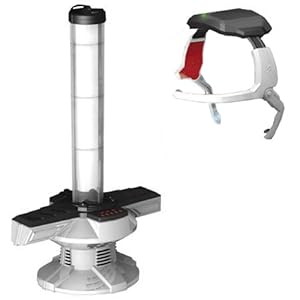
a game or to direct you to a particular pathway in a make your own adventure film plot. E.E.G or electroencephalogram amplifies the brain out put to a frequency. Depending on a relaxed state the user can change this output to move an object. Sold as a kids toy you can buy a star wars science force trainer. This moves up and down according to how relaxed you are. Translate the same action for games and video adventure and you have Neurosky's mind wave brain scanner. As well as using one of its apps to look or Parkinson's disease, the mind probe is a unobtrusive headset like device that allows alpha waves to be a crucial part in the games control.


Its hard to guess which way emerging technology will go to create a possible future. I like to think of cyborgs exist in the future. But with great power comes great stupidity or at lease criminal cyborg activity. Brain remapping might be a possibility for robots to be controlled. Certainly not by Alpha wave control, where you have to relax to work a machine. Complex controls can't be replaced by how relaxed you are, not unless direct brain to machine remapping is involved.

Sunday, 10 June 2012

Woman, Adverts and how to sell stuff


I gonna have to apologise for today's entry, the fact is its politically impolite to think of people as objects of desire. While the geek in me would think of technology and shiny things as the main precious items of desire. In normal circumstances I would agree, but the basic instincts of an bloke would prefer to think of the fairer sex. Birds, ladies women who look pretty, stimulates more then gadget lust.

In the news papers and general media, it seems normal to see women as sexually appealing. As consumers, it mostly appears that a beautiful lady would sell more then an ugly person. Studies have shown that sex sells considerably more low risk products on impulse buying. High risk product, or bank services, appliances and utility products are not effected. Magazines such as Cosmopolitan, Redbook, Esquire, Playboy, Newsweek and Time
have 20% of its ads containing sexual imagery. This has changed over time as well with the figures at 15% in 1983 and 27% in 2003 using sex to sell all kinds of consumer products.
 Its more scary that 92% of beauty adverts use models and 7% are male models. This whole idea of beauty to sell crap, has distorted my idea of women. Its gets to the point that you are always looking for something better or prettier.
Its cool to have fantasy and to think nice thoughts about the opposite sex, from time to time. But I find it harder to see what is naturally beautiful, in a society that puts false beauty first.


One of the regular conversations I have with male friends is, what do I look for in a woman?. I have to go with red hair as a main feature. Mainly because I used to fancy a friends older sister and she was one of those unobtainable real person you would try to reach( a first crush). After that comes the facial features and hair , boobs and height.
Nowadays the conversation would be, which is currently attractive?. I would say the quirky girls tend to tickle my fancy Zooley Deschannel (the new girl, hitch hiker guide to the galaxy) or anyone with a personality. While most would go for looks or sex appeal.

The whole "locker conversation" about women, tends to be about banging this chick or screwing that woman.
These conversations have me bored, because it never evolves other then the scenarios on how you would try to have sex. But the majority of people who go to the movies or watch adverts right up until the end are ruled by sex appeal. That's why I like foreign films, which have a real life like quality about them.

Going on dates and meeting people builds up your confidence, to talk all kinds of crap. Most women I picked up, like the fact when I talk to them. I take what ever subject and turn it to a funny story. Usually its a lie. the story comes form an obscure tv plot line. Meeting people in the real world makes me forget the false beauty thing and restores me to normal parameters of what I go for in a woman. Thats unless she is exaggerating her beauty herself with boob jobs and other cosmetic surgery.

The main thing is that false beauty is a male conversation stopper. I had interviews with potential bosses with boobs popping through their shirts and all I can think was little else.
That's why I act cool and think several moves ahead to stop this weird lusty feeling, which was actually pre-programmed into me when watching adverts, films and anything else with a model in it.
At C.E.S. or the gadget show live or any convention selling tech or comics you will see hot booth babes or real nice looking Cosplay women that will distort your sexual reality.
For me its best to know the game, to see that sex sells in any business. If that doesn't grab your attention doesn't then looking successful, or having a funny personality comes close.


Miami Dolphins cheerleaders get in on the Call Me Maybe craze